
Power and current
Single-Phase Current Calculation: kW and kVA Examples at 230 V
Single-phase current depends on what the power rating means. Electrical kW, apparent kVA and mechanical output need different inputs.
Calculate single-phase current →Published 3 October 2026

Read the power label before choosing the formula
At 230 V, a 5 kW electrical load and a 5 kVA load do not necessarily draw the same current. A 5 kW motor shaft rating introduces a third question because electrical input must also supply the motor’s losses.
Open the single-phase example. The system selector is already set to single phase. The voltage remains an input, not a universal assumption about every supply.
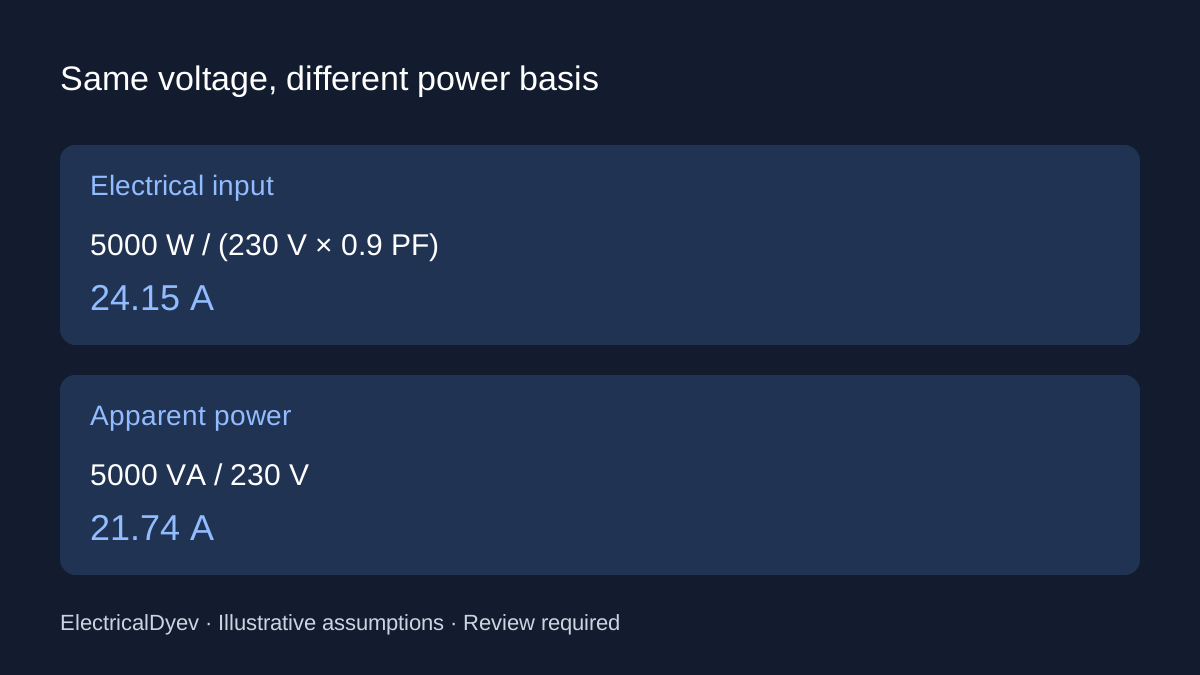
Electrical input: 5 kW at PF 0.9
For active electrical input power:
I = P / (V × PF)
I = 5000 / (230 × 0.9) = 24.15 A
Power factor is dimensionless. The 5 kW becomes 5000 W before division. If PF were one, current would be 5000 / 230 = 21.74 A. The higher current at PF 0.9 follows from needing more apparent power to deliver the same active power at the same voltage.
Do not insert efficiency here if 5 kW already describes electrical input. That would count losses a second time.
Apparent power: 5 kVA at 230 V
For apparent power:
I = S / V = 5000 / 230 = 21.74 A
No PF is needed to obtain current from kVA. At PF 0.9, this operating point corresponds to 4.5 kW active power, not 5 kW. The converter can display that separate active-power estimate, but changing PF must not change the kVA-derived current.
Shaft output: 2.2 kW with 85% efficiency
Suppose 2.2 kW is mechanical output, efficiency is 0.85 and operating PF is 0.8. These are example assumptions, not default properties of all motors.
Electrical input = 2200 / 0.85 = 2588.24 W
I = 2588.24 / (230 × 0.8) = 14.07 A
Use nameplate and manufacturer information for the actual operating point. Efficiency and PF can change with loading. A calculation based on rated output is not a prediction of starting current or a substitute for a measured operating current.
Where the voltage is measured matters
Use the voltage across the load terminals. A single-phase load can be connected line-to-neutral or, where designed for it, between two lines. Having a three-phase supply upstream does not turn each individual branch load into a balanced three-phase calculation.
This is why √3 does not belong in the examples above. For a complete balanced three-phase load, use the separate line-current formula and line-to-line voltage. The line/phase converter helps identify the quantities, but it does not choose equipment wiring.
Current is an input to further checks
After obtaining current, voltage drop still depends on the route and conductor information. Cable capacity depends on installation conditions and traceable data. Protection requires checks that are not contained in the power equation.
Retain the power basis, voltage, PF and any efficiency used alongside the result. When comparing with a clamp reading, ensure the load was in the operating state represented by your calculation.
Calculate another single-phase case, or use the kVA worked examples if the available rating is apparent power.
Sources and limits
Preliminary engineering aid only. These are preliminary steady-state calculations, not circuit or equipment approval. Starting current, waveform effects and installation conditions require separate professional assessment.
Verify applicable laws, standards, manufacturer data and project conditions with a qualified electrical professional before construction, procurement or regulatory submission.
CONTINUE READING
Related articles
Power and current
kVA to Amps: Single-Phase and Three-Phase Worked Examples
The same kVA rating produces different current at different voltages. Start with the phase arrangement and the voltage reference.
Power and current
Horsepower to electrical input: where efficiency belongs
A motor’s shaft output is smaller than its electrical input. Correct conversion begins by identifying which side of the machine the rating describes.
Power and current
From clamp-meter amps to kW: worked examples at 230 V and 415 V
A current reading becomes useful power information only when voltage, phase arrangement and power factor come from the same operating condition.