
Power and current
Horsepower to electrical input: where efficiency belongs
A motor’s shaft output is smaller than its electrical input. Correct conversion begins by identifying which side of the machine the rating describes.
Open the power and current calculator →Published 26 September 2026
Begin by naming the quantity
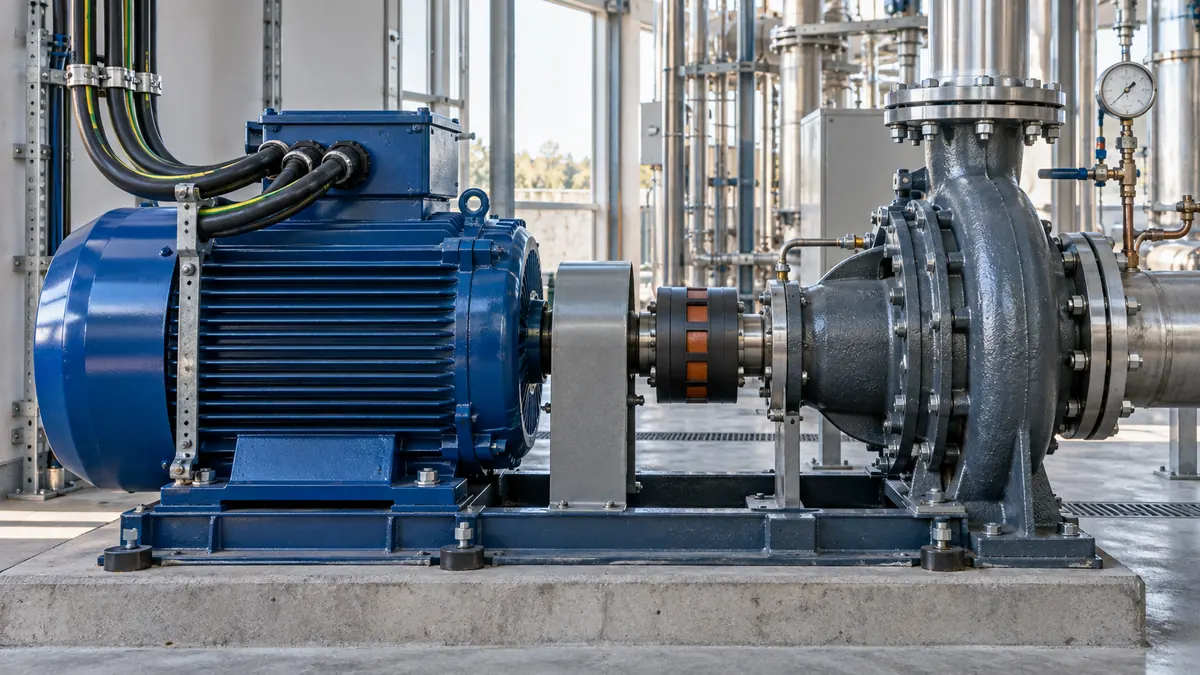
Horsepower on a motor is normally associated with mechanical shaft output. Electrical current calculations need electrical input. The two are connected by efficiency, but they are not interchangeable.
Mechanical horsepower is approximately 745.699872 W. Metric horsepower is approximately 735.49875 W. The difference is small but real, so the convention should be visible rather than guessed.
Convert output, then account for losses
For 10 mechanical hp:
Pshaft = 10 × 745.699872 = 7,456.999 W
At 90% efficiency:
Pelectrical = 7,456.999 / 0.90 = 8,285.554 W
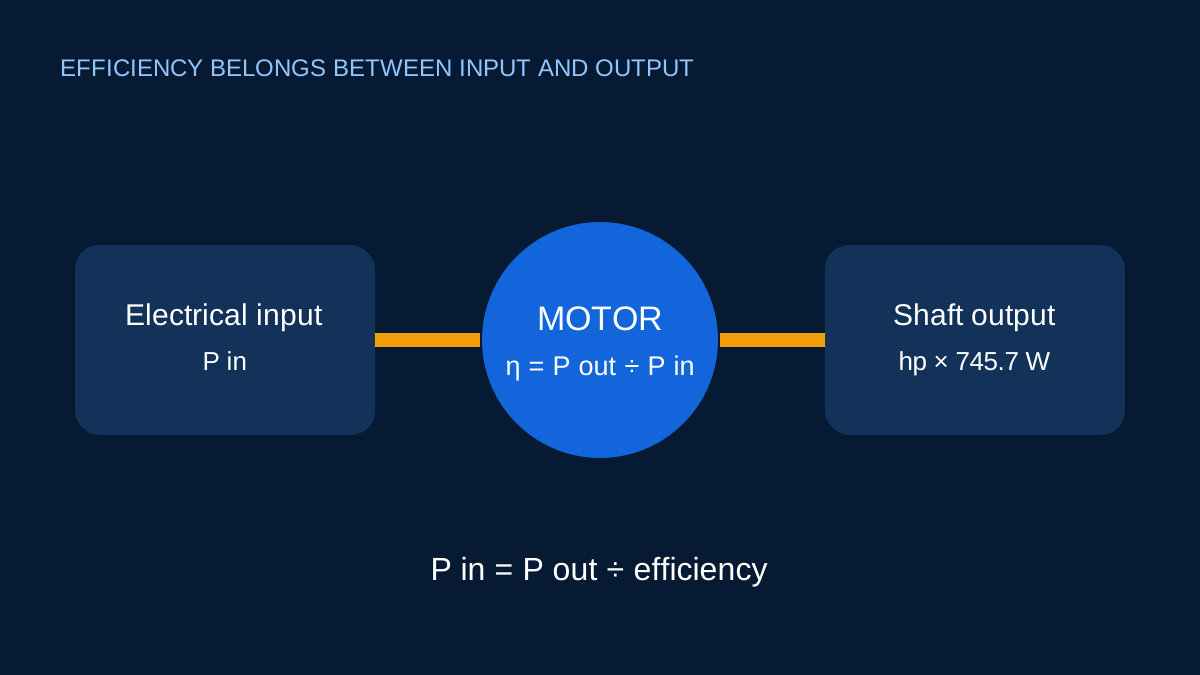
Efficiency belongs in the denominator because the electrical input must supply both useful shaft output and machine losses. Multiplying shaft output by 0.90 would incorrectly make input smaller than output.
Add the AC relationship
For a balanced three-phase motor supplied at 415 V with power factor 0.85:
I = 8,285.554 / (√3 × 415 × 0.85) = 13.56 A
This is a steady running estimate using assumed efficiency and power factor. Actual nameplate current is generally more useful when available because it belongs to the specific motor design and rating condition.
Do not apply efficiency twice
If a value is already electrical input kW, do not divide it by efficiency again. If a drive display reports motor electrical output while another meter reports drive input, conversion boundaries differ. Label each quantity by location: supply input, drive output, motor electrical input or shaft output.
Efficiency changes with operating point
Nameplate efficiency is not a promise that every load point has the same value. Light loading, voltage conditions and motor design affect performance. Power factor also changes with load. A current estimate built from rated values may not describe a lightly loaded operating machine.
Where the result is useful
The conversion helps check orders of magnitude, compare rating conventions and prepare a preliminary load schedule. It does not determine motor acceleration, starting current, overload protection, drive size or driven-machine torque.
When equipment information exists, use it. When assumptions are unavoidable, record the horsepower convention, efficiency, power factor, voltage and whether the rating is input or output. Those labels matter more than extra decimal places.
Mechanical and metric horsepower are not identical
Mechanical horsepower is approximately 745.7 W. Metric horsepower is approximately 735.5 W. The difference is modest but real. A 10 hp label therefore represents about 7.457 kW using the mechanical convention or 7.355 kW using the metric convention.
Do not choose a convention from geography alone. Read the equipment documentation or state the assumption. ElectricalDyev defaults to mechanical horsepower and exposes metric horsepower as an explicit alternative so the conversion does not happen silently.
Work from output back to input
If 10 mechanical hp describes shaft output and efficiency is 90%:
Poutput = 10 × 745.7 = 7,457 W
Pinput = 7,457 ÷ 0.90 = 8,286 W
For a 415 V balanced three-phase supply at PF 0.85:
I = 8,286 ÷ (√3 × 415 × 0.85) = 13.56 A
Multiplying output by efficiency would move in the wrong direction and produce an input smaller than the useful output. Division is the appropriate direction because input includes output plus losses.
Efficiency is an operating-point quantity
A motor’s efficiency and power factor vary with load. Using rated values for a lightly loaded machine may not reproduce measured current. Starting current is a different transient phenomenon and can be several times steady current, depending on motor and starting method.
For an installed motor, prefer the nameplate and manufacturer performance data. For energy or loading studies, measure representative operation rather than assuming the nameplate output is continuously delivered. A horsepower conversion is a unit and energy-flow check, not a motor model.
Keep power factor separate from efficiency
Efficiency relates electrical input power to mechanical output power. Power factor relates active electrical power to apparent electrical power. They appear at different steps and cannot replace each other.
A clear calculation trace is: identify shaft output, convert hp to watts, divide by efficiency to obtain electrical input watts, then use voltage, phase and power factor to obtain current. Writing those stages separately makes it much easier to review an unexpected result.
Sources and limits
Preliminary engineering aid only. Calculated running input does not represent motor starting current, drive input behavior, duty limits or mechanical suitability.
Verify applicable laws, standards, manufacturer data and project conditions with a qualified electrical professional before construction, procurement or regulatory submission.
CONTINUE READING
Related articles
Power and current
How to convert kW to amps for preliminary electrical work
A practical guide to the relationship between power, voltage, power factor, efficiency and line current.
Measurements and equipment
Reading a motor nameplate before calculating current
A nameplate already contains many of the assumptions a calculator would otherwise have to guess. Read them as one matched rating set.
Power and current
20 kW to amps at 415 V: a worked three-phase example
At 415 V three phase, 20 kW can mean several different line currents because operating power factor and efficiency matter.